Status is a spreadsheet
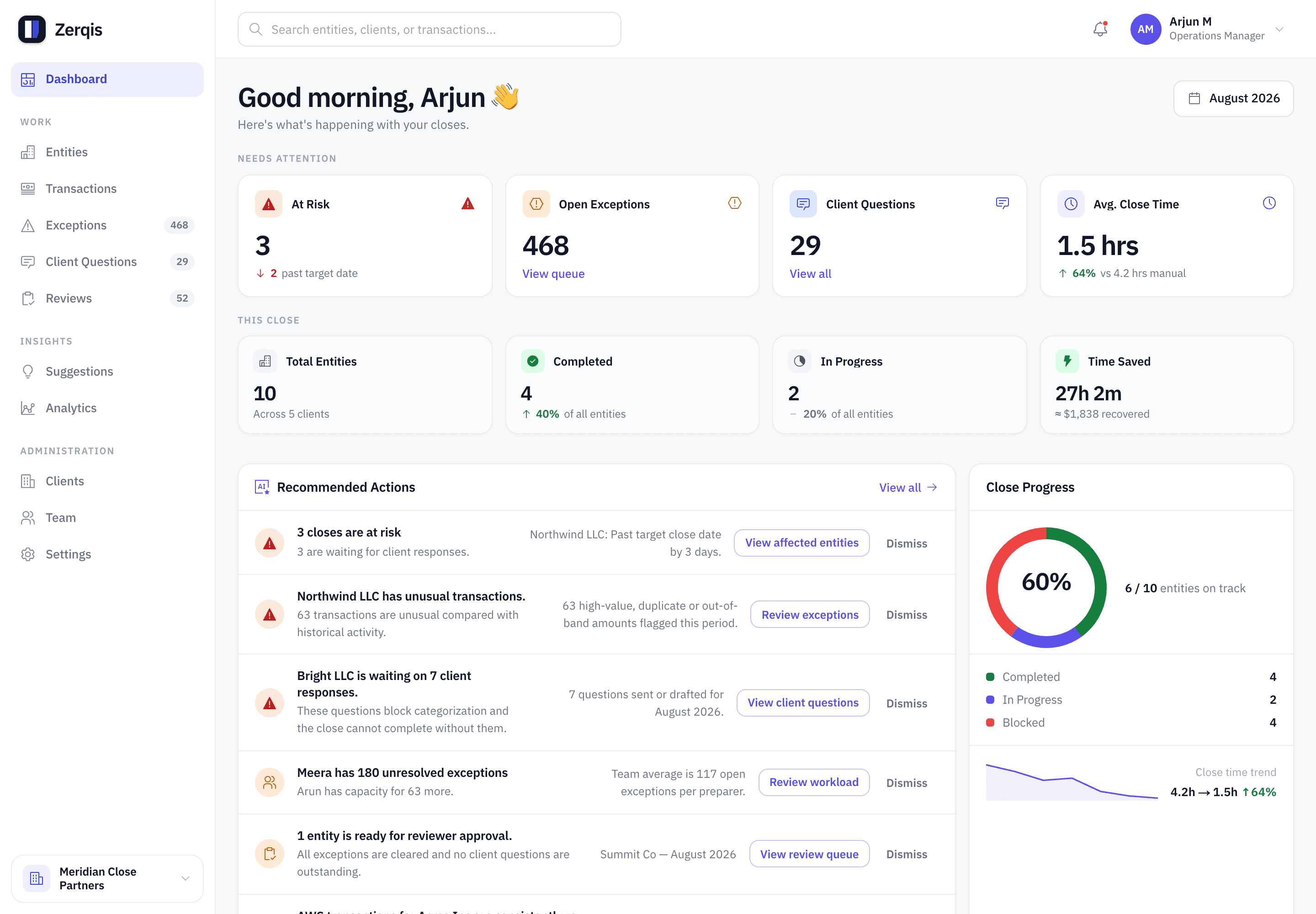
Close status lives in the product rather than in a tracker someone updates by hand — categorized percentage, open exceptions, open questions, target date.
Outsourced work is judged on predictability. Zerqis makes the state of every close visible, so a date you promise is a date you can defend.
The four things that usually decide whether the month lands on time.
Close status lives in the product rather than in a tracker someone updates by hand — categorized percentage, open exceptions, open questions, target date.
Questions are raised against a transaction and tracked to the close they block, so a slow client is a visible dependency rather than a surprise.
Each suggestion carries the history and rules behind it, so a colleague picking up an entity can see why it was categorized that way.
Analytics measure close time against your own manual baseline, per entity and per period — a number you can show a client.
What changes
See how Zerqis can help your accounting team reduce repetitive work and focus on what matters.